The Monkey Method
Five steps. Real cars on real dealer lots. Nothing held back. The touch-up technique the detailing groups say takes a two-year apprenticeship, shown start to finish.
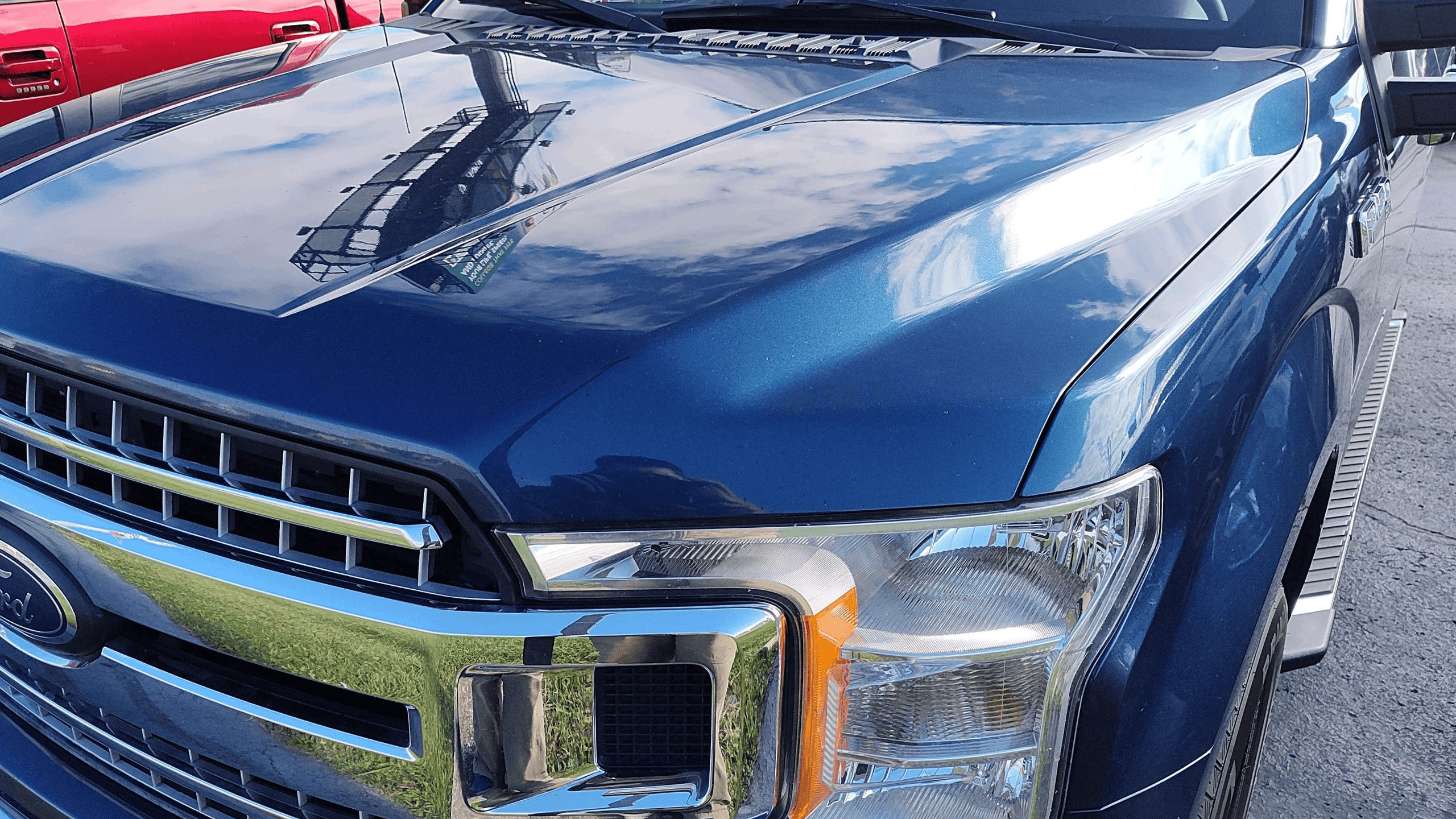 AFTER
AFTER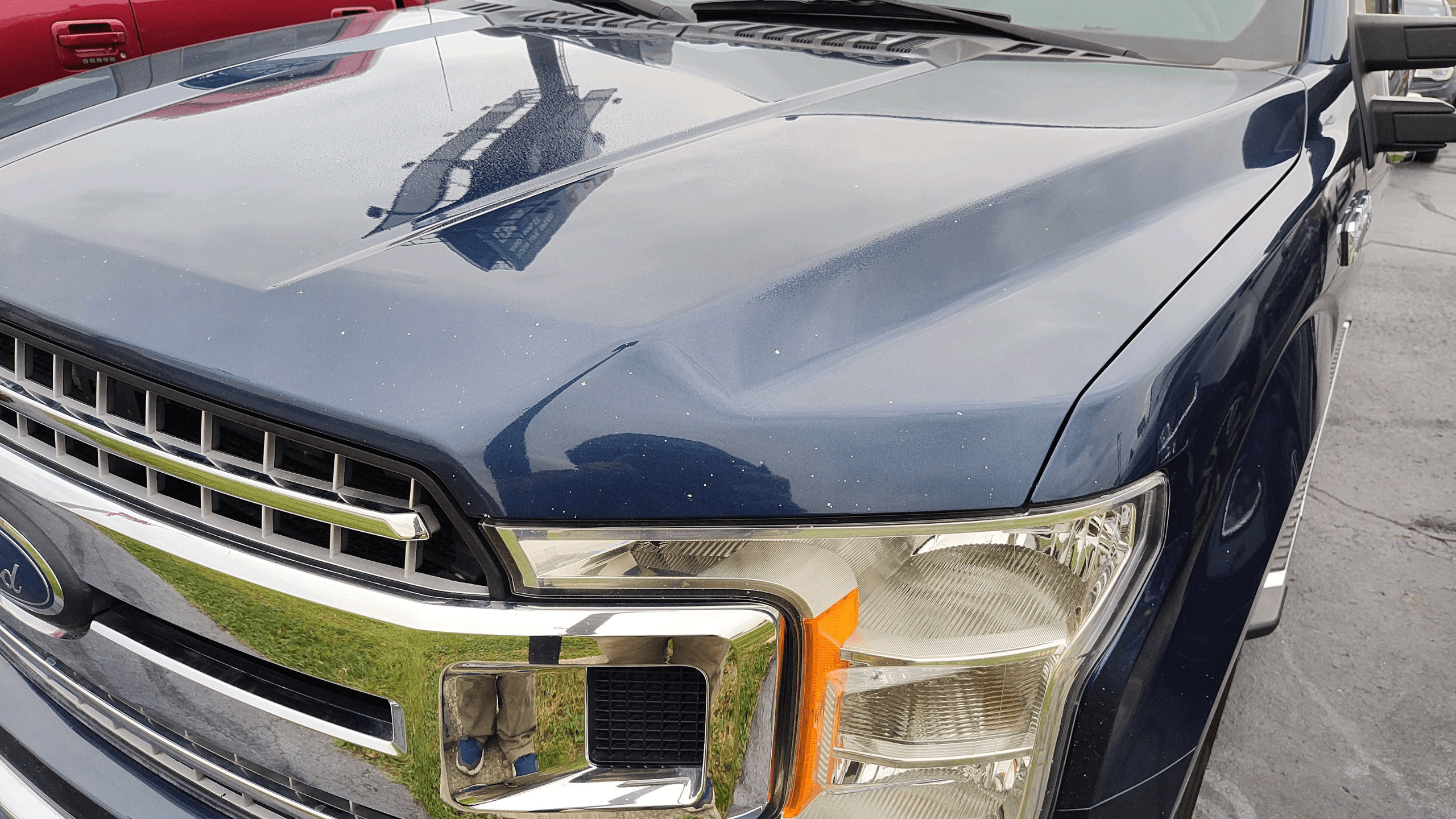 BEFORE
If you have ever posted a touch-up in a detailing group, you know what comes next. "That's a body shop job." "You'll ruin the clear." "Leave it to the painters."
I have spent ten years doing this on dealer lots, on cars that were for sale that afternoon. No booth. No key. The car never moved. The fix you see above took minutes, and the buyer who bought that car never knew there was a chip.
The technique is not secret and it is not hard. It is five steps and the discipline to use less paint than you want to. Here is all of it, then each part of it on its own page.
- 1
Clean the surface.
Chips collect wax, road film and old touch-up. Paint over that and it lifts in a week. Wipe the chip and an inch around it until a white towel comes back white.
- 2
Put paint on the chip.
A precise drop from the precision tip, or smear it on. It honestly does not matter, because the next step fixes whatever you did. Get color into the chip and let it dry to the touch.
What you use15ml Precision Bottle with a Monkey TipPaint mixed to the code on the door jamb, in the bottle Brandon actually reaches for. - 3
Level it with Monkey Milk.
Once the paint is dry to the touch, drip Monkey Milk into a folded Monkey Fiber Cloth and wipe across the chip. The excess comes off the clear coat, the fill stays in the chip. It takes seconds, and anyone can do it. This is the step the groups say you cannot do without a booth. This is the whole step.
What you useMonkey Milk + Monkey Fiber Leveling ClothThe leveling solvent and the cloth it is designed to be used with. - 4
Dry it with a microfiber.
One pass. If a halo is left, a little more Monkey Milk on the cloth and go again. Stop when the panel reads as one color from three feet.
- 5
Step back and feel proud to be the badass you are.
This is not a joke step. You just did the thing they told you needs an apprenticeship. Look at it from where the buyer stands. That is the standard.
The video I was too scared to post.
Everybody in the groups says "yeah, but do that on silver." So I did, on camera, with the method above. Put your email in and I'll send it, then one story a day about how I got my first dealer.
One method. Several hand skills.
The five steps are the frame. Each of these is one skill inside it, taught on its own so you can practice it on its own.
Everything in the method, in one place.
The method is written in the names of the tools because that is how it is taught in the field. The precision bottle with a Monkey Tip on it, Monkey Milk, the Monkey Fiber Cloth, paint mixed to the code. Learn it on a practice card first, then take it to a customer's car.
- 15ml Precision Bottle, mixed to your paint code
- Monkey Tips (the precision tips for the bottle)
- Monkey Milk (1 oz or 4 oz)
- Monkey Fiber Leveling Cloth
- The screw-on adapter that takes the syringe tips, so the bottle seals for shipping
- Practice card for the first fifty chips
Sold to working automotive professionals for practice and service work. Not a consumer product.
The full training is free inside the app.
Touch-Up Basics is the Monkey Method taught the way I teach my own crew, on real chips. The app that tags the car, takes the before and after, and sends the invoice comes with a 14-day free trial. After that it's $97 a month, with unlimited cars.
Start the free training